OFFER: A BRAND NEW SERIES AND 2 FREEBIES FOR YOU!
Grab my new series, "Brave Hearts of the Frontier", and get 2 FREE novels as a gift! Have a look here!
 Chapter One
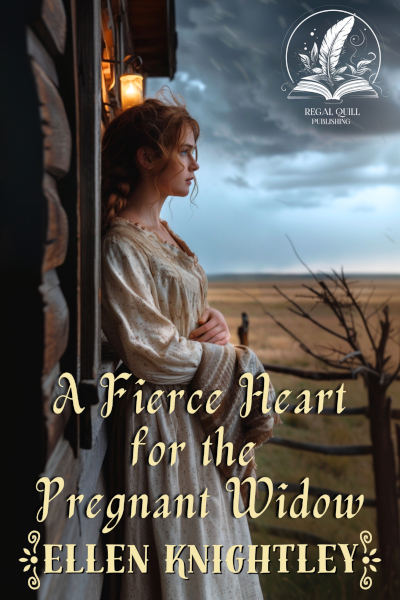
The wind had a sharp edge that morning, cutting through Lydia’s shawl as if determined to remind her how far the world could reach when it wanted to. Out here, on the wide stretch of Oklahoma Territory, the wind came for everyone—howling through the grasslands, rattling the loose boards of the barn, slapping dust against her cheeks until they burned.
It was the spring of 1890, and there wasn’t much between her and Graystone but ten miles of open prairie. The nearest neighbor was three miles off, too far to call for help if trouble came quick. Out here, a woman learned to rely on her own two hands and the rifle by the door.
She jammed the dull end of a fence post into the hole she’d dug and leaned her weight against it. Her arms ached, shoulders tight from four months of doing every chore alone. The earth was stubborn, sunbaked from weeks without proper rain, and the hammer in her hand felt heavier each time she lifted it.
“Come on, now,” she muttered, voice roughened by the dry air. “Don’t you start giving me trouble, too.”
The post wobbled. Lydia gritted her teeth, lifted the mallet, and brought it down hard. The sound echoed across the empty plain—one sharp, lonely crack against all that space. She lowered the tool, breath shallow, and for a moment let herself listen to the quiet that followed.
Not quite quiet, though. The kind of silence that hummed—wind through grass, the low creak of the barn door, and somewhere far off, a hawk’s cry.
She pushed back her hair, loose from the braid that had half come undone, and squinted against the morning glare. Her hands were rough from the cold and from work she’d never had to do before Tim fell ill.
He’d been good with fences. Better with laughter.
A lump rose in her throat before she could swallow it down. “Four months,” she said softly, though there was no one to hear her. “And still I can’t patch this place right.”
Her belly tightened, the faint weight of life shifting within her. She was near four months along now—far enough to feel every flutter, not yet so heavy she couldn’t work. The doctor in town had warned her to take it easy, but the fences didn’t care much for warnings.
She pressed a palm there out of habit—half comfort, half reminder. She wasn’t alone, not really. But there were nights she still woke reaching for the other side of the bed, forgetting he wasn’t there to reach back.
When she straightened again, stretching her spine, something caught her eye. A movement up on the ridge beyond the north field.
She froze.
A figure stood there—still as a tree, dark against the pale sky.
For a heartbeat she thought her eyes were playing tricks, that it was one of the old cottonwoods bending in the wind. But no—the shape was wrong. Too straight. Too human.
Her heart kicked up hard. She wiped the sweat from her brow with the back of her hand and looked again. The person didn’t move. Just stood there, watching.
“Tim?” she whispered foolishly before shaking her head. “Don’t be ridiculous.”
Whoever it was, he was tall. Maybe a ranch hand passing through, maybe one of the drifters from the trails near Graystone. There’d been talk in town about men wandering these parts, some looking for work, some for trouble.
Lydia’s pulse thundered in her ears. The ridge wasn’t far—two fields and the creek between—but out here, distance could fool you. A man could close it quick if he wanted.
She bent down slowly, fingers curling around the fence mallet again, her grip slick with sweat. The iron felt too heavy to swing, but she held it tight anyway.
“Go on,” she whispered toward the ridge. “Turn and walk away.”
The wind carried no answer.
She backed away from the fence, step by step, eyes never leaving the figure. When she reached the edge of the yard, she turned and quickened her pace toward the house, skirts snagging against the dry brush.
Her boots hit the porch boards and she pushed through the door, closing it hard behind her. The sound made the baby kick, a flutter low and quick, and she pressed her palm there again. “Easy now. Mama’s just spooked, is all.”
The room smelled faintly of smoke and biscuits gone cold. Sunlight cut through the curtains, laying bars of light across the worn floorboards. Everything in here was too quiet. She went to the window, peeking through the thin lace curtain.
The ridge was empty now.
She exhaled shakily and set the mallet aside.
“Probably just a ranch hand,” she said aloud, because saying it made it truer. “Or a traveler cuttin’ through.”
But her voice didn’t sound convinced, even to her own ears.
She tried to shake it off and busied herself at the stove, rekindling the fire. The wood hissed and spat as it caught. A few minutes later, the kettle whistled, and she poured herself a cup of weak coffee.
The first sip scalded her tongue. The second steadied her nerves a little.
Outside, the wind shifted direction, carrying the scent of dry grass and faint rain on the horizon. She’d grown used to the smells of this land—the dust, the sweat, the faint sweetness of the cottonwoods down by the creek—but sometimes, when the wind hit just right, she could almost smell the perfume her mother used to wear back in St. Louis. Lavender and something faintly citrus.
That memory always hurt worse than she expected.
Her family had written once after she married Tim. The letter hadn’t been kind. After that, nothing. She supposed that made it final.
They’d never see her again, not as Mrs. Hartwell. Not as the widow, either.
The letter from home still sat folded in the Bible on her nightstand, words sharp enough to sting even now, but she was too far from St. Louis for hurt feelings to matter.
Lydia set the cup down with a soft clink, drawing in a steadying breath. “Doesn’t matter,” she murmured. “They wouldn’t know what to do out here anyway.”
She glanced toward the window again. The ridge was still empty, but her nerves refused to settle. She moved about the house, checking the latch on the back door, the rifle leaning beside the fireplace, and the small trunk near the bed where Tim’s things were folded.
His hat still hung on the peg by the door. The sight of it made her chest ache. She reached out and ran her fingers along the brim, brushing away the dust that had gathered there.
“Reckon you’d tell me to stop frettin’,” she whispered. “Sayin’ I got more grit than sense.”
She smiled faintly at the thought, then sighed.
Outside, a gust rattled the shutters. The sound made her jump again, and she cursed under her breath for being jumpy as a colt.
“Get a hold of yourself, Lydia Hartwell,” she said firmly, straightening. “You’ve weathered worse.”
Still, she couldn’t bring herself to return to the fence line.
Not yet.
Instead, she took up her shawl and went to sit on the porch steps, needing the open air. The sun had climbed higher now, burning off the last of the morning chill.
Her fingers found the smooth wood of the railing, worn from years of use. From here, she could see the wide expanse of her land—the patchy fields, the grazing pasture beyond, the line of cottonwoods marking where the creek bent.
It was beautiful, in a hard kind of way. This land took as much as it gave. But she loved it, even when it broke her heart.
A faint shape moved out by the horizon again. Her body tensed until she saw it was only a pair of deer darting through the tall grass.
She let out a shaky laugh. “Fool woman,” she muttered.
The wind shifted again, bringing with it a scatter of dust that made her sneeze. She brushed her sleeve across her face and noticed how frayed the fabric had become. Her wardrobe had seen better days.
So had everything else on this land.
She’d managed so far on what Tim had left behind, selling eggs, butter, and goat’s milk to the mercantile. But it was getting harder to make ends meet. If she couldn’t fix the fence before the next storm, she’d risk losing half the herd.
Her hand went instinctively to her belly. “Don’t you worry,” she said softly. “Mama’s not givin’ up yet.”
She stood, brushing dust from her skirts, and glanced once more toward the north ridge. The sun caught something there—a glint of metal, maybe, or movement where there shouldn’t be any. Whoever that man was, he hadn’t gone far.
Lydia straightened her shoulders. If he meant her no harm, he’d show himself soon enough. And if he did—well, she knew how to shoot.
Chapter Two
Caleb Gower found the trail at first light, a pair of dainty slots pressed into dry earth where the grass thinned near the creek. A doe and last season’s fawn, moving light and careful.
He’d been riding the far edge of Graystone country with his brothers, fanning out to see what the land offered after a hard spell, but the tracks bent south and he lost sight of Sam and Harlan in the swale. He whistled once—two short notes to say all’s well—then eased his gelding along at a walk.
The early sun caught the copper-brown of his skin and the dark braid tucked beneath his hat brim—a shade that spoke of his mother’s Cherokee blood. Folks in Graystone wrote him down as Caleb Gower because the Gowers had taken him in when winter turned mean and he had no one left to claim him.
He answered to it easy enough in town, though the name never did sit right in his chest. Blood said Cherokee. His memories said mother’s song and a father whose face blurred at the edges.
The Gowers said “son” without fuss, and sometimes that was the thing that kept a man standing.
Out here, though, where it was him and the sky, he was just Caleb.
The wind worked in steady breaths. It brought him the taste of dust and something warmer—woodsmoke, faint as memory. He swung down where the trail broke into open country and led the horse by the reins, boots whispering through buffalo grass.
His rifle rode easy in the scabbard. He didn’t plan on shooting. Not today. The herd at Hillside had enough meat for now. But tracking quieted his mind. That was reason enough.
He crested a low rise and stopped.
A fence cut the land into tidy bites, weathered posts listing like tired men. Near the far corner a woman worked, small and stubborn as a badger, shoulders set as she wrestled a bowed rail back into place. The wind tugged at her skirt and shawl. She paused between blows of the mallet, one hand settling to the gentle curve of her belly.
She was with child. And alone.
Caleb felt something in his chest hitch, a faint, familiar pinch that came when the world showed its rough side too plain. He looked past her to the house, to the barn with its sagging door, to the cottonwoods along a crooked line of water. Whoever kept this place was carrying more than her share.
The woman lifted the mallet again. The post wobbled and he saw her body tense, saw the grit that kept her standing there instead of turning away from a job too big. He respected grit. Knew what it took to get up every day and face what didn’t care whether you made it through or didn’t.
He shifted, and the gelding blew a breath. The woman’s head snapped up. Even at distance he read the change: wariness straightening her spine, the small step back, the chin that said she’d run if she had to, fight if she couldn’t. She spotted him on the rise and went still.
He recognized that stillness. A doe had it when she scented cat.
Caleb lifted his hand, palm open.
“Easy,” he said, though the wind ate the word. He kept his horse at a standstill, made no move to close the ground. Her gaze held his, sharp and scared and proud all at once.
He’d seen that look in town enough times—eyes measuring the planes of his face, the bronze cast of his skin, deciding what part of him counted. Some remembered solders and raids, others only what stories their fathers told, and forgot a man could carry both bloods without owing allegiance to hate.
Some folks never learned he was Ezekiel Gower’s son in all the ways that counted.
The woman started back toward the house, slow at first, then quicker when the mallet slipped in her grip. She didn’t turn her back on him—smart—only eased away until she hit the yard and then the porch. When the door shut, the sound reached him like a soft clap.
He let his hand fall and worked his jaw until tension drained. No sense blaming her for caution. Out here, caution kept you standing.
He waited. The wind combed the grass flat and let it rise again. A hawk floated the thermals. His horse cocked a hip and sighed.
He could turn east and find Harlan’s trail; he could leave this patch of bad fence to the widow who lived here, if she was a widow, or to a husband laid up sick, if there was one. But the way she’d pressed her palm to her belly told a plain story. She had no second pair of hands close by.
Caleb stroked the gelding’s neck and spoke low. “Let’s take a look.”
He guided the horse down, not toward the house but the fence corner, giving the yard a wide berth. When he reached the broken post, he tied the reins to a sturdy cedar and tested the rail with his palm.
Dry rot. The bottom length had sucked moisture for too long and gone soft. Someone had tried to patch with baling wire, but the loop had snapped and scraped the wood bright.
He crouched. The hole around the post had widened; the wind worked everything loose when it got two days to chew. He pulled off his gloves, set them on a rail, and started digging with his fingers, scraping out crumbled earth until his nails packed brown.
He worked bare-handed, fingers lean and deft, marked by sun and wind in a way that told of years lived outdoors, closer to the earth than to any town.
The work put heat in his arms. It put quiet in his head. He measured the post, sawed the rotten tail clean with the short saw he carried in his saddlebag, and tamped the bottom with a flat stone.
The tools made a simple language: scrape, thud, rasp. A language he could speak without trying to be something he wasn’t.
Wood creaked behind him. He didn’t turn until a soft footfall scuffed the yard dust.
“Sir,” a woman’s voice said, polite as a parlor, even with a rifle’s distance in it.
He stood then, slow, and wiped his hands on his trousers. Up close she looked younger than he’d guessed from the rise—maybe twenty-two, three. Freckles light as wheat dust, hair the color of new copper where the sun found it, eyes the blue of creek shade. Her face carried exhaustion like a weight she refused to set down.
She held a pitcher and a tin cup. The pitcher rattled against the metal rim, only once, before she stilled it with her fingers.
“You’re on my land,” she said.
“I am.” He touched two fingers to the brim of his hat. “Name’s Caleb Gower. My people are the Gowers over in Hillside.”
Her gaze flicked to his cheekbones and back to his eyes. He kept his face open, not smiling but not closed off, either. He knew how he looked to some. It wasn’t shame that made him gentle in these moments, just knowledge.
“What is it you want here, Mr. Gower?”
She put a handle on his name like good manners were a habit, not a show.
“To set this post straight,” he said. “And the next one, if it won’t hold.”
She didn’t answer right away. Her eyes went to the hole, the shavings, the saw. She set the pitcher on the top rail and poured. The tin sang soft when the water struck it.
“Do you often decide such things on your own?” she asked.
“Sometimes the land does the deciding.” He nodded at the far field. “Storm’s coming from the west by the smell of it. Wind’ll worry the whole corner out by nightfall if we leave it.”
The woman studied him. Her knuckles had a raw scrape across two ridges, fresh and angry. He found himself wanting to take her hands and wash the dirt from that cut, pack clean cloth under it, tell her not to grip a mallet so tight when the wood jumps. He didn’t move.
“You can have some water,” she said at last, and held the cup out. “It’s all I’ve got on hand to offer.”
“Much obliged.” He took it, careful not to brush her fingers. The coffee he’d had before dawn felt like another country in his stomach. The water was clean and cool; he swallowed once and passed the cup back. “You can call me Caleb,” he added.
She hesitated, then said, “Lydia.” She gave her name like a measured step forward. “Lydia Hartwell.”
He nodded. “I’m sorry for the ask, Miss Hartwell, but you got another post driver? Yours is split. I can make do, but it’ll chip worse.”
“There’s a sledge in the barn. It’s heavy.”
“I’ll fetch it.”
“You don’t have to.”
“I know.”
The wind clipped the ends off their words. Lydia glanced toward the porch, toward the rifle by the door—he noticed the empty corner where such a tool ought to rest—and back to him. She wasn’t going to tell him no. Pride and sense were having their quiet fight in her eyes. Sense was winning, but pride was going down swinging.
“You can fetch the sledge,” she said. “And please return it when you’re finished.”
“Yes, ma’am.”
He walked to the barn, felt her stare on his back until the door swallowed him. The place smelled like a life he understood: hay, sweat, old leather, oil that had been rubbed into tack enough times to make it shine even in dust. He found the sledge by feel—heavy, good head, handle worn dark where a man’s palms had lived—and returned to the fence with it balanced on his shoulder.
Lydia had set the pitcher aside and was kneeling by the hole, fingers scooping. He crouched beside her without comment and used his hand to pack the bottom, tamping hard.
Side by side they worked, her breath steady, his slower, the scrape of their knuckles against grit the only complaint the earth made.
“Did you say a storm is coming?” she asked after a while.
“Smells like one,” he said. “Wind’s got a bite that says rain’s dragging her feet behind it.”
She glanced at the horizon. “We could use the rain.”
“Fence’ll use it too if the posts are straight.”
A ghost of a smile touched her mouth. “That so?”
“That so.”
They set the post, his hands holding low while she sighted high. He liked that she took that job without being told, liked the sure way she narrowed one eye to check plumb against the drop of a string.
When she called “good,” he lifted the sledge and drove the earth down hard, three solid blows, a quarter turn, three more. The sound carried clean across the field. He felt it through his arms, through the soles of his boots, the way you feel a thing that is right.
“You’ve done this before,” she said.
“Yes, ma’am.”
“With the Gowers?”
“Since I could walk straight with a hammer.” He paused, then added, “Before that I learned to set snare sticks level. Different work, same lesson.”
Her gaze cut to him, curious, then softened. “Well. Thank you, Mr… Caleb.”
He rolled the name she’d given him around in his head: Lydia. It fit. He didn’t know why. He only knew some names sounded like they’d been earned.
“We’ll brace the corner next,” he said, and went for his saddlebag.
When he came back with wire and a turnbuckle he’d scavenged off a broken gate back home, Lydia’s eyes widened. “You carry that on a pleasure ride?”
“Don’t figure work and pleasure are two separate roads,” he said, and was surprised when she laughed. Not much—a quick, warm sound, there and gone—but it loosened something in his chest.
He couldn’t remember the last time he’d made a woman laugh on purpose.
They set the brace, working in a rhythm that didn’t need talk. Thick clouds scudded across the sky. The wind turned a shade cooler. He felt the storm inching closer and worked faster.
“Caleb,” Lydia said after a time, quiet. “You from Hillside proper?”
“Yes, ma’am.”
“You said you’re… Gower family.”
He heard the shape of the question inside her words; he knew it by heart. He kept his tone easy. “Ezekiel took me in when I was nine. Found me after some bad men had been through. He didn’t ask where I belonged. He told me.”
Lydia’s fingers paused on the wire. “I see.”
He didn’t look at her. He twisted the line and watched it shine under tension.
“Some folks never did,” he said, because he’d learned to turn the barb blunt with a little humor before it came at him sharp. “But most learned. Gowers are loud when they want somethin’ known.”
“That much I’ve observed,” she said, and he heard the smile even if he didn’t risk looking to catch it. “I have met Harlan in passing—once.”
Caleb snorted. “Then you’ve met a hurricane with boots on.”
“Seemed that way.” Her voice gentled. “You have people who look out for you.”
“I do.”
He risked a glance then. Lydia’s eyes were on the brace, but her mouth had softened, and the tight band that had lived across her shoulders since he’d first laid eyes on her had eased a fraction. Trust wasn’t there yet. But something like the idea of it had come and sat quiet between them.
They finished the corner. He sat back on his heels and rolled his shoulders once; the sledge had a good honest weight to it. Lydia stood, brushed dust from her skirt, and set her hand to her belly without seeming to know she’d done it.
“You should rest a spell,” he said. “I can walk the line and set what’s loose.”
“I can walk with you.”
“You can. But you don’t need to.”
Her chin went up, more pride than temper. “I don’t take to bein’ told what I need.”
“I can respect that.”
She searched his face as if looking for mockery. Finding none, she exhaled. “I’ll fetch more water.”
“Yes, ma’am.”
He watched her cross the yard, watched the measured way she carried herself so the child she bore wasn’t jostled more than wind required. When the door shut behind her he turned to the pasture and set off along the fence, palm dragging the rails, eyes skimming for slack wire, loose nails, places the wind had worried thin.
He wasn’t fool enough to name the feeling that had set up in him. But all at once the country didn’t feel so empty.
And that was reason to keep moving.
He found two more posts that wanted straightening and a length of wire that had given up halfway between. By the time Lydia returned, he’d already set one post and was kiltering the second with his boot and hip while the earth settled.
She handed him the cup without a word. He drank, wiped his mouth with the back of his wrist, and nodded toward a cracked insulator where telegraph wire had once crossed this corner before the line shifted south.
“You had a wire crew out here?” he asked.
“Years ago.” Lydia’s gaze followed his. “Before I came. Tim said the company moved the line closer to town after a storm took the poles.”
“Storms make their own rules.” He set the cup on the top rail. “You and Tim work this place long?”
Her breath caught, a small sound she tried to swallow. “Not long enough,” she said. “He died four months ago.”
“I’m sorry.” The words were plain. He didn’t try for more because more often made it worse.
She nodded once. “Thank you.”
They stood with the fence between them, the rails a line that made it easier to say hard things. Caleb eased the post a fraction, then drove the sledge down twice to set it.
Lydia watched his hands and not his face, and he understood that, too. Sometimes looking a man in the eye made sorrow bigger than it needed to be.
“Your folks in town?” he asked after a while, keeping his tone casual.
“No.” She twisted a scrap of hem between two fingers, then stilled it. “My family is back East.”
“You got friends?”
“A few.” She paused. “Enough.”
He weighed that answer and let it be. The wind rattled the grass and the sky grayed another shade. He could smell rain proper now—wet metal and new dirt. Thunder built somewhere past the western ridge.
“Storm will roll in late,” he said. “Best chance is to get this line tight before then. You got stock likely to test it?”
“Goats.” The corner of her mouth kicked. “They test everything.”
“True enough.”
He walked on. Lydia fell in beside him despite what he’d said about rest. She kept her steps measured, one hand brushing rails for balance. After a while she asked, “Why are you helping me?”
He didn’t stop. “Fence needed settin’.”
“Is that the answer you give strangers?”
“It’s the truth I live by.” He paused, then glanced sideways. “But if you need a different sort of truth, I’ll say this: no one keeps a place alone. Not for long. Not out here.”
She studied him. “And you simply help without asking for coin?”
“I ain’t sellin’ you a sledge swing,” he said. “I’m mendin’ a fence.”
“That sounds like coin to me.”
“It’s a day’s peace.”
She blinked, once. “Peace?”
“Hands busy. Work clear.” He tipped his chin toward the open grass. “Don’t ask questions I don’t want to answer.”
She walked silent for a dozen paces. “What questions do you not want to answer?”
He huffed a breath that was almost a laugh. “The kind a man can’t do anything about by standin’ still and talkin’ on them.”
“Such as?”
“Such as why a face like mine makes some folks’ hands itch.” He kept his tone easy, not daring her, not accusing. “Or why a boy can remember a song he learned before he was nine but not the faces that sang it. Some questions are a circle. Work is a line. Lines are kinder, most days.”
Lydia’s hand tightened on the rail. “People in Graystone talk,” she said, voice flat. “I don’t have much patience for it.”
“You ain’t alone in that.”
“Do you receive the same in Hillside?”
“Less. People got to know me there.” He checked a nail head with his thumb. “Knowing takes time. Gossip’s faster.”
She made a small sound of agreement. It wasn’t a laugh this time. It was closer to pain smoothed down until it shone.
They reached the next post and he set to work. Lydia steadied the rail while he tamped the dirt. She winced when the sledge sang and sucked in a breath through her teeth.
“You all right?” he asked, lowering the tool.
“The baby has opinions about loud noises,” she said, cheeks going pink.
He nodded, solemn as a judge. “I’ll swing shorter.”
“You don’t have to—”
“I know.” He shortened his stroke anyway, and the sound turned from sharp ring to dull thud. The tension in Lydia’s shoulders eased by degrees.
“Tim meant to set this line before winter,” she said after a time. “He fell ill before he could.”
“What’d he catch?”
“Fever. The doctor called it typhoid. I called it a thief and a liar.” She stared at the rail. “Took him quick. Too quick for me to swallow it proper.”
“I’ve had things go quick,” Caleb said. “Doesn’t make ’em less real.”
“No,” she whispered. “It doesn’t.”
He didn’t offer scripture or sayings. He let the work be the comfort, because he’d learned that a steady hand on a tool could soothe better than talk that tried too hard.
By midday the sky was the color of creekwater under cloud. They’d tightened a hundred yards and set three posts. Lydia’s hair had pulled loose of its braid in copper wisps that stuck to her cheek. He found himself wanting to tuck one back for her, then kept his hands where they belonged.
“Come and eat,” she said at last, as if surprised by her own offer. “I have biscuits and a bit of salt pork, and I can scramble eggs.”
“Only if you let me carry the bucket,” he said, and reached for it before she could argue. “And if you don’t trouble yourself over coffee. Water’s plenty.”
She hesitated, then nodded. “All right.”
They walked to the porch. Near the door she paused and gave him a look he understood perfectly: I will let you step inside my house, but I will watch you do it.
“That’s fair,” he said quietly.
“What is?”
“Whatever it is you’re fixin’ to say about rules in your own home.”
She blinked, then snorted softly. “Please, wipe your boots,” she said, but her mouth had softened.
“Yes, ma’am.”
OFFER: A BRAND NEW SERIES AND 2 FREEBIES FOR YOU!
Grab my new series, "Brave Hearts of the Frontier", and get 2 FREE novels as a gift! Have a look here!
Hello my dear readers! I hope you enjoyed this preview. Comments are most welcome. Thank you!